ABOUT KeNSi
KeNSi(ケンシ)
1968年生まれ。東京文化服装学院卒業。
石川県能美市のアパレルセレクトショップ「carleerou(カーリールー)」オーナー。
ファッション業界で培った経験を背景に、自身のサンプリングアート作品やアートTシャツを制作・販売しています。
2018年にはオーストラリアのギャラリーにて個展を開催。2024年からはTAKATA建築と協働し、住宅や店舗空間へのペイントアート制作にも携わるなど、表現の場を広げています。
KeNSi
Born in 1968, KeNSi graduated from Bunka Fashion College in Tokyo.
He is the owner of “carleerou,” an apparel select shop based in Nomi City, Ishikawa, Japan.
Drawing on his long experience in the fashion industry, he creates and presents sampling artworks and wearable art T-shirts that blur the boundaries between fashion and contemporary art.
In 2018, he held a solo exhibition at a gallery in Australia. Since 2024, he has collaborated with TAKATA Architecture on painting projects for residential and commercial spaces, expanding his artistic practice into architectural environments.
ABOUT KeNSi’s ART
KeNSiの制作の根底にあるのは、「サンプリング」という手法です。
サンプリングアートとは、既存のイメージや素材の一部を抽出し、再構成することで新たな作品へと昇華する表現方法です。それは単なる引用ではなく、異なる時代や文脈をつなぎ合わせ、新しい価値や視点を生み出す創造的な行為でもあります。
一方で、この手法はオリジナリティや著作性についての問いも内包しています。だからこそKeNSiは、「何を選び、どのように再編集するのか」という作家自身の視点と感性にこそ、作品の本質が宿ると考えています。
作品には、1960年代初頭から中頃のアメリカの大衆消費社会を象徴する雑誌、広告、コミック、映画などのイメージがしばしば登場します。自身が愛する映画やファッションカルチャーを素材として取り込み、複数の要素や技法を組み合わせながら、新たな表現へと変換していきます。
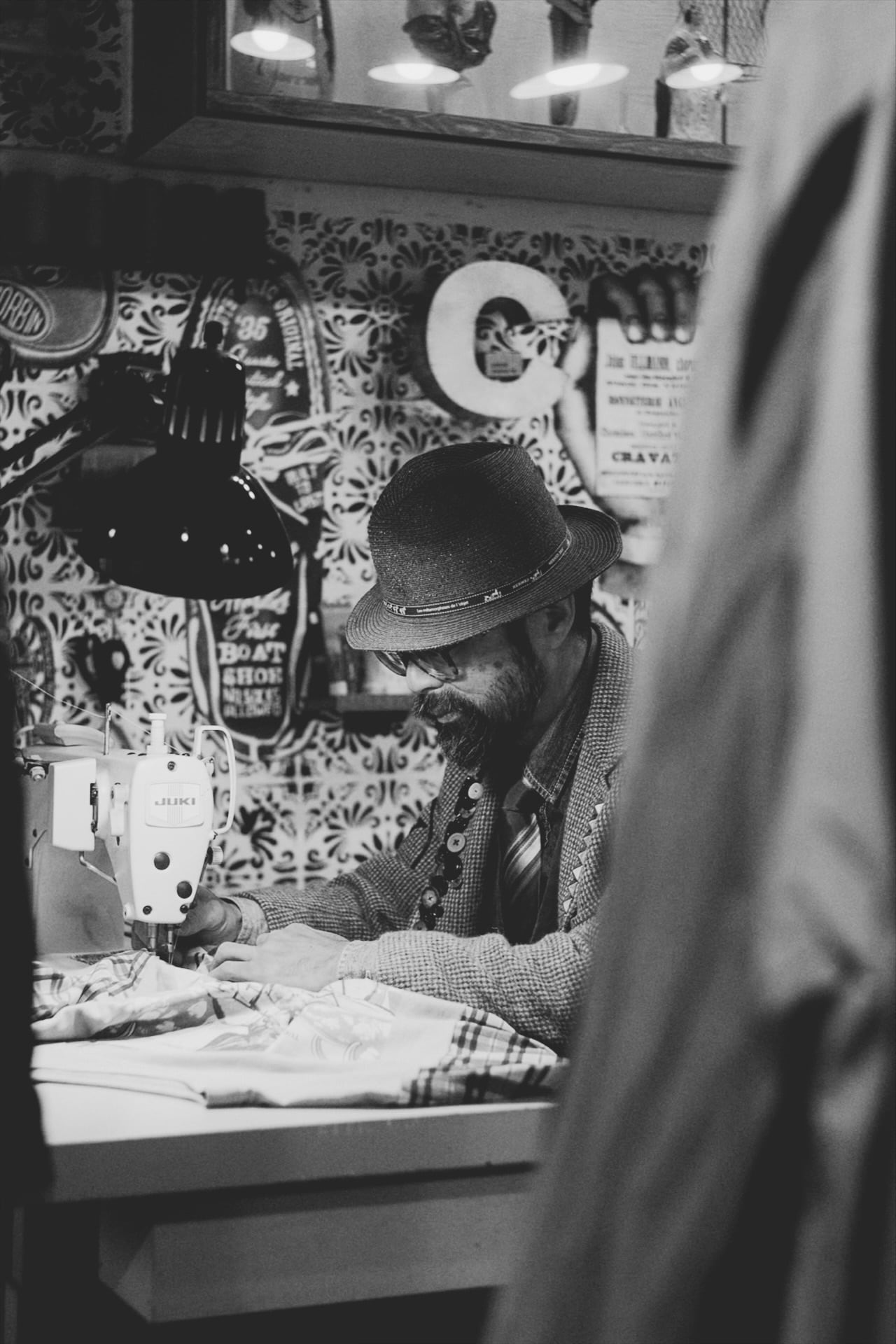
また、KeNSiの表現はデジタル上だけにとどまりません。プリント、ペイント、段ボール、布、スプレーなどの素材を用い、時にはミシンによる縫製を重ねながら、平面作品から立体作品まで多様なかたちへと展開しています。
Sampling lies at the heart of KeNSi’s artistic practice.
Sampling art is a creative process in which fragments of existing images and materials are extracted, transformed, and reassembled into new works. Rather than simple appropriation, it is a way of connecting different eras and contexts to generate fresh meanings and perspectives.
At the same time, sampling inevitably raises questions about originality and authorship. KeNSi believes that the essence of the work resides in the artist’s own choices: what is selected, how it is transformed, and the unique sensibility brought to the process.
Many of his works draw inspiration from the imagery of American consumer culture from the early to mid-1960s, including magazines, advertisements, comics, and films. Influenced by his love of cinema and fashion culture, he combines diverse visual elements and techniques to create new forms of expression.
His practice extends beyond digital media. Through print, paint, cardboard, fabric, spray techniques, and sewing, his ideas evolve into both two-dimensional and three-dimensional works.